

If you live, work, or spend time in a coastal community in B.C. you may have heard about High Ground Hikes taking place during Tsunami Preparedness Week, which runs from April 12 to 18. These community events are open to everyone and offer a simple, hands-on opportunity to learn about your area’s tsunami risk and practise what to do if a tsunami occurs.
Whether it’s your first time or you’ve participated before, a High Ground Hike is a chance to learn, practise and connect with your community – all while taking an important step toward being prepared.
What happens during a High Ground Hike?
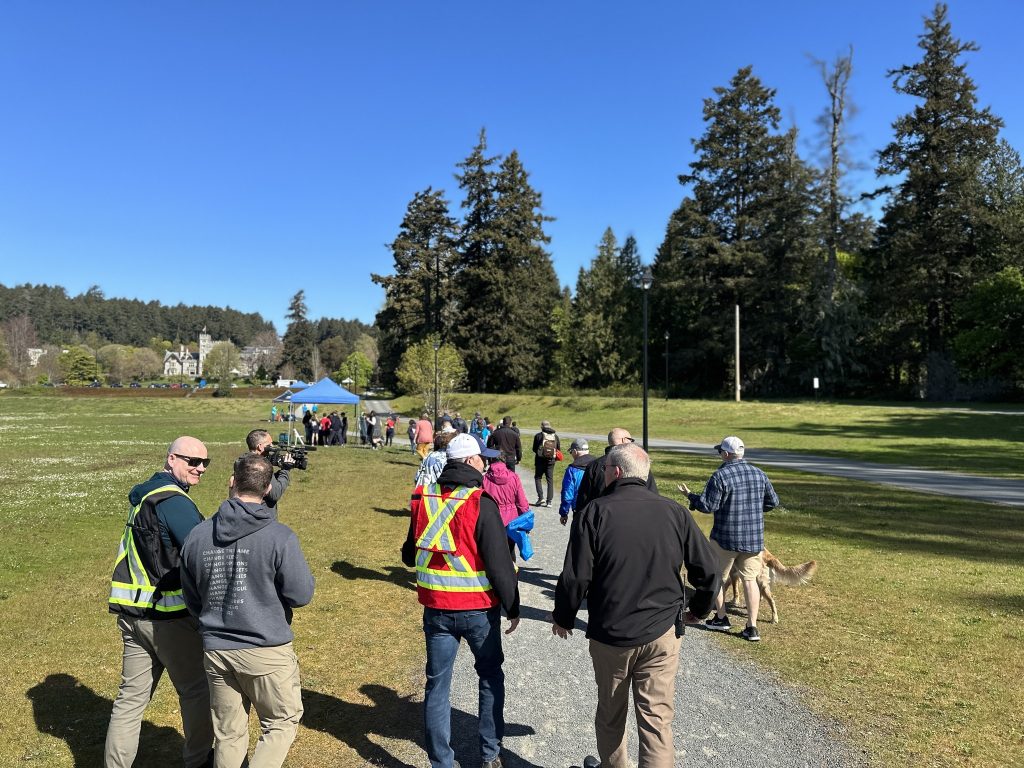
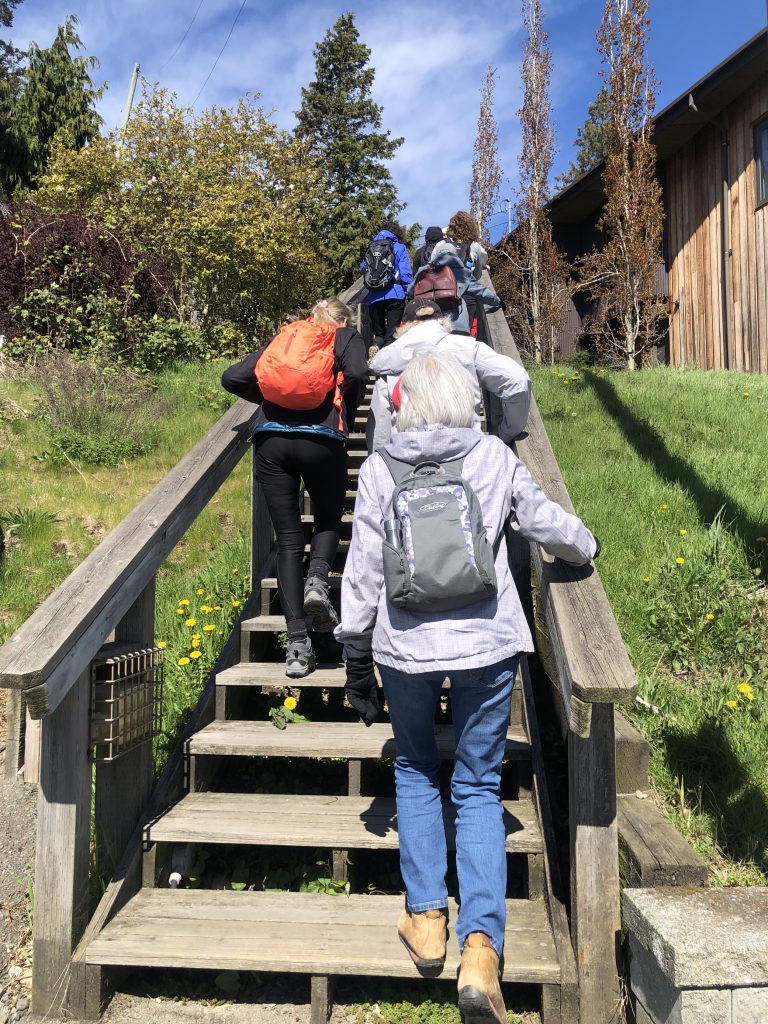
Every High Ground Hike is a little different, but most events follow a similar flow. A High Ground Hike is typically a community walk that follows a local tsunami evacuation route from a coastal or low-lying area to a tsunami-safe location.
Events are usually held outdoors and are designed to be accessible, welcoming and family‑friendly. Some High Ground Hikes may also include activities, displays, or opportunities to talk with local emergency personnel or preparedness experts. Others keep it simple and focus on practising the route itself.
Why attend a High Ground Hike?
High Ground Hikes are about turning information into action. Attending helps you:
- Practise your evacuation route: Knowing where to go is important, but practicing how to get there builds familiarity and confidence.
- Build “muscle memory”: In a real emergency, stress can make decision‑making harder. Practising in advance helps your body and mind remember what to do.
- Learn from your community: High Ground Hikes are a chance to share questions, observations and local knowledge with neighbours and community leaders.
- Take a positive step toward preparedness: Emergency preparedness doesn’t have to be overwhelming. A High Ground Hike is a simple, social way to get started.
How to prepare before you attend
You don’t need to do much to take part, but a little preparation can help you get more out of the experience.
Before the event:
- Check event details: know the meeting location, start time, and approximate distance
- Dress for the weather: comfortable shoes, layers, and rain gear if needed
- Bring water and any personal items you may need
Learn ahead of time:
- Find out if you live, work, or visit areas within a tsunami notification zone
- Talk with your household about where you would go in the event of a tsunami
- Read PreparedBC’s Earthquake and Tsunami Preparedness Guide so the hike reinforces what you already know
After the hike: keep preparedness going
A High Ground Hike is a great starting point, and many people use it as motivation to take next steps such as:
- Reviewing or creating a home emergency plan
- Building or updating a grab‑and‑go bag
- Learning how local alerts and warnings are shared
- Sharing what you learned with friends, family, or coworkers
Preparedness is strongest when it becomes part of everyday awareness, not just a one‑time activity.
Join a High Ground Hike in your community
If your community is hosting an event during Tsunami Preparedness Week in April, consider joining in! Find out by contacting your community’s emergency program or by visiting PreparedBC.ca/HighGroundHike.